

Village Dated to First Bulgarian Empire Discovered
The previously unknown medieval Bulgarian village has been discovered as a result of rescue excavations for the construction of the Hemus Highway, a road linking the Bulgarian capital Sofia with the city of Varna on the Black Sea via the Danube Valley in Northern Bulgaria.
An archaeological team led by Stanislav Ivanov from the Shumen Branch of the National Institute and Museum of Archaeology in Sofia explored the archaeological site of the 9th century Bulgarian village in September 2020. More than 100 people, including 16 archaeologists, took part in the rescue excavations, BTA reports.
The site in question is located near today’s town of Gradishte, Shumen District, in Northeast Bulgaria. (“Gradishte” is an old Bulgarian word referring to a “fortress” or a “stronghold”.)
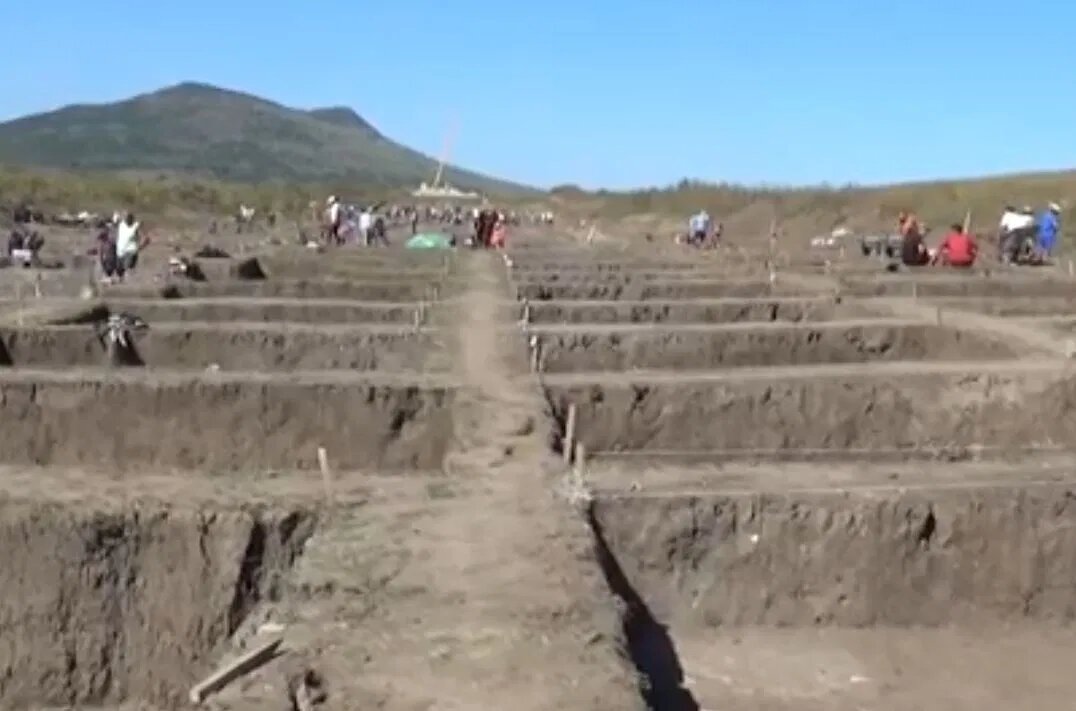
Archaeologists have discovered a 9th century AD village from the time of the First Bulgarian Empire (632/680 – 1018 AD) near the town of Gradishte, Shumen District, in Northeast Bulgaria, with some 80 dugouts offering a glimpse into the life of the non-aristocratic population at the time.
The 9th century AD was a very turbulent time for the First Bulgarian Empire but also a prelude to its greatest rise, with its so called Golden Age beginning in the second half of the century and lasting into the middle of the 10th century.
For the First Bulgarian Empire, the 9th century started with the rule of Khan Krum the Fearsome (r. 803 – 814 AD), and ended with the beginning of Tsar Simeon I the Great (r. 893 – 927 AD). It saw the conversion of the entire Bulgarian Empire from paganism to Christianity and the development and adoption of the Bulgaric (Cyrillic) alphabet under Knyaz Boris I (r. 852 – 889; 893 AD) ushering into the rise of the Old Bulgarian literary language.